Research
Publications
Papers on optimization, machine learning, and medical image analysis.
7 papers
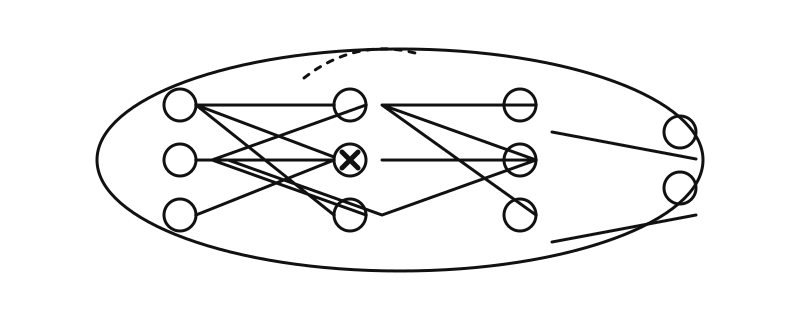
Unraveling Dropout: Classifying Dropout Methods in the Context of Research Challenges Across Data Types
Amir Mohammad Sharafaddini
Computer Science Review
This review examines how dropout methods are used across data types and research settings, organizing their design choices, strengths, and trade-offs. It highlights that regularization can behave differently for images, text, and structured data, so the choice of dropout strategy should reflect the task and model. The manuscript is currently under review.
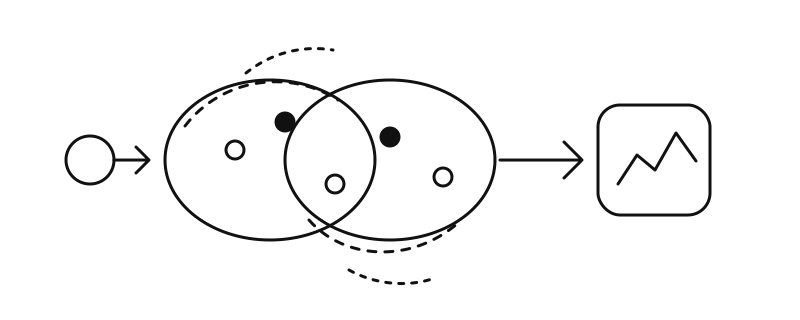
Dual Memory Matrix Gannet Optimization with Dynamic Weight Adjustment for Robust Feature Selection
Amir Mohammad Sharafaddini, Behnam Mohammad Hasani Zade, Najme Mansouri
Cognitive Computation · Springer Nature
This study introduces an improved gannet-based feature-selection method that keeps two complementary memories of promising solutions. It adapts the scoring weights to balance predictive performance with selecting fewer, more useful features. The authors evaluate it on benchmark functions and 17 datasets, comparing its results with established optimization methods. The approach aims to search more reliably, avoid premature convergence, and produce compact feature sets.
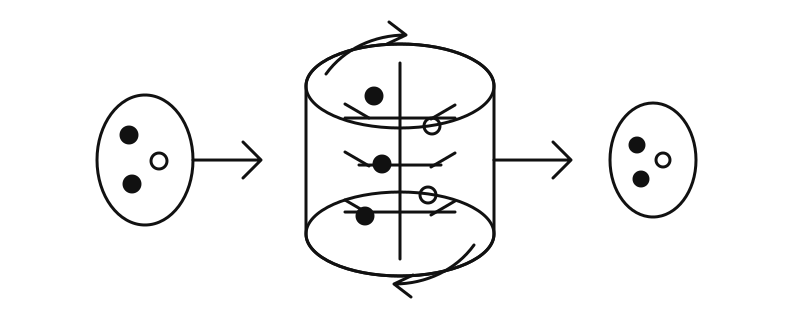
Attrition Mill Optimization Algorithm: A Novel Approach for Solving Engineering Optimization Problems
Amir Mohammad Sharafaddini, Behnam Mohammad Hasani Zade, Najme Mansouri
The Journal of Supercomputing · Springer Nature
Attrition Mill Optimization (AMO) is a metaheuristic inspired by the repeated interactions inside an attrition mill. Its three stages—initialization, operation, and rejuvenation—balance broad exploration with local refinement, while opposition-based learning helps preserve diversity. The study evaluates AMO on benchmark functions and engineering design problems, comparing solution quality and computational speed with other optimization algorithms.
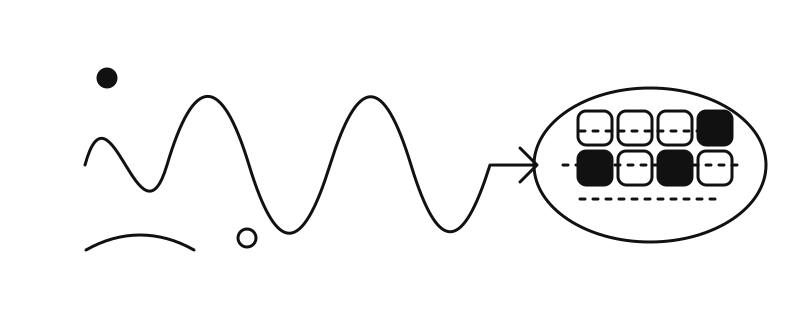
A Binary Chaotic Transient Search Optimization Algorithm for Enhancing Feature Selection
Amir Mohammad Sharafaddini, Najme Mansouri
Arabian Journal for Science and Engineering · Springer Nature
This paper adapts transient search optimization to the binary choices used in feature selection. Chaotic sequences guide the search across candidate feature subsets, helping the method explore more widely and avoid redundant inputs. Evaluated on 12 UCI datasets, the approach is compared with established methods using classification performance, convergence, and diversity. It offers a focused way to select compact, informative feature sets.
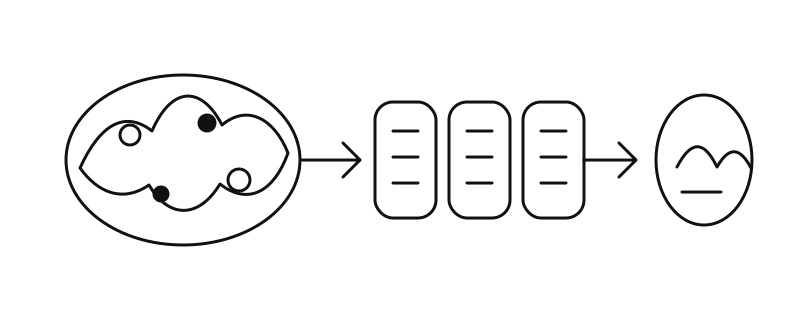
Leveraging Transfer Learning for High-Accuracy Breast Cancer Classification from Histopathological Images
Amir Mohammad Sharafaddini, Najme Mansouri
6th International Conference on Electrical Engineering, Computer, Mechanics, and Artificial Intelligence
This study explores transfer learning for classifying breast cancer from histopathological images. It adapts visual features learned from broader image datasets to tissue microscopy, aiming to make better use of labeled medical images and recognize patterns associated with cancer classes. The work evaluates this approach as a practical route toward computer-assisted analysis of breast tissue.
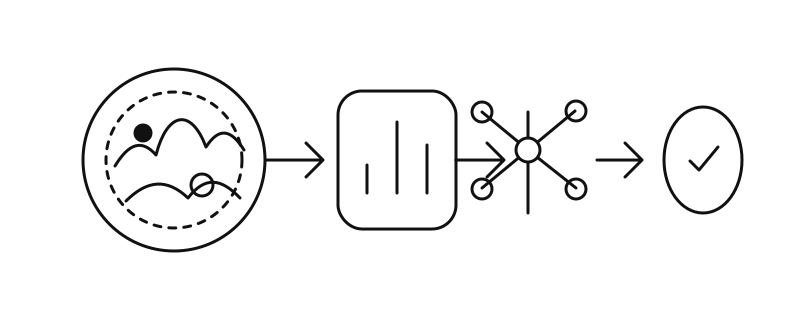
Enhanced Skin Cancer Classification Using Deep Learning and Gradient Boosting Techniques
Amir Mohammad Sharafaddini, Najme Mansouri
2024 14th International Conference on Computer and Knowledge Engineering (ICCKE 2024) · IEEE
This conference paper explores a skin-cancer classification pipeline that combines deep-learning image features with gradient-boosting techniques. The approach aims to use representations learned by neural networks while drawing on the practical strengths of boosted decision trees. It evaluates this combination for distinguishing skin-cancer categories and contributes to research on computer-assisted analysis of medical images.
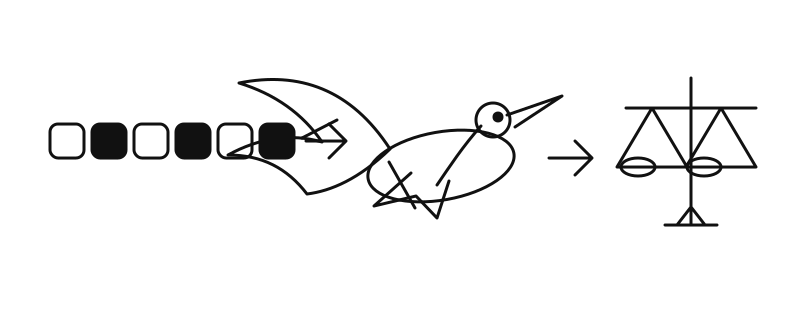
An Efficient Gannet Optimization Algorithm for Feature Selection Based on Sensitivity and Specificity
Amir Mohammad Sharafaddini, Najme Mansouri
Journal of Algorithms and Computation, 54(2), 49–69
This work adapts gannet-inspired search to feature selection, where a compact feature set must still help a classifier detect both positive and negative cases. It considers sensitivity and specificity when evaluating candidate subsets, connecting the optimization process to practical classification needs. The study explores how this nature-inspired search can support more balanced feature selection on benchmark data.